
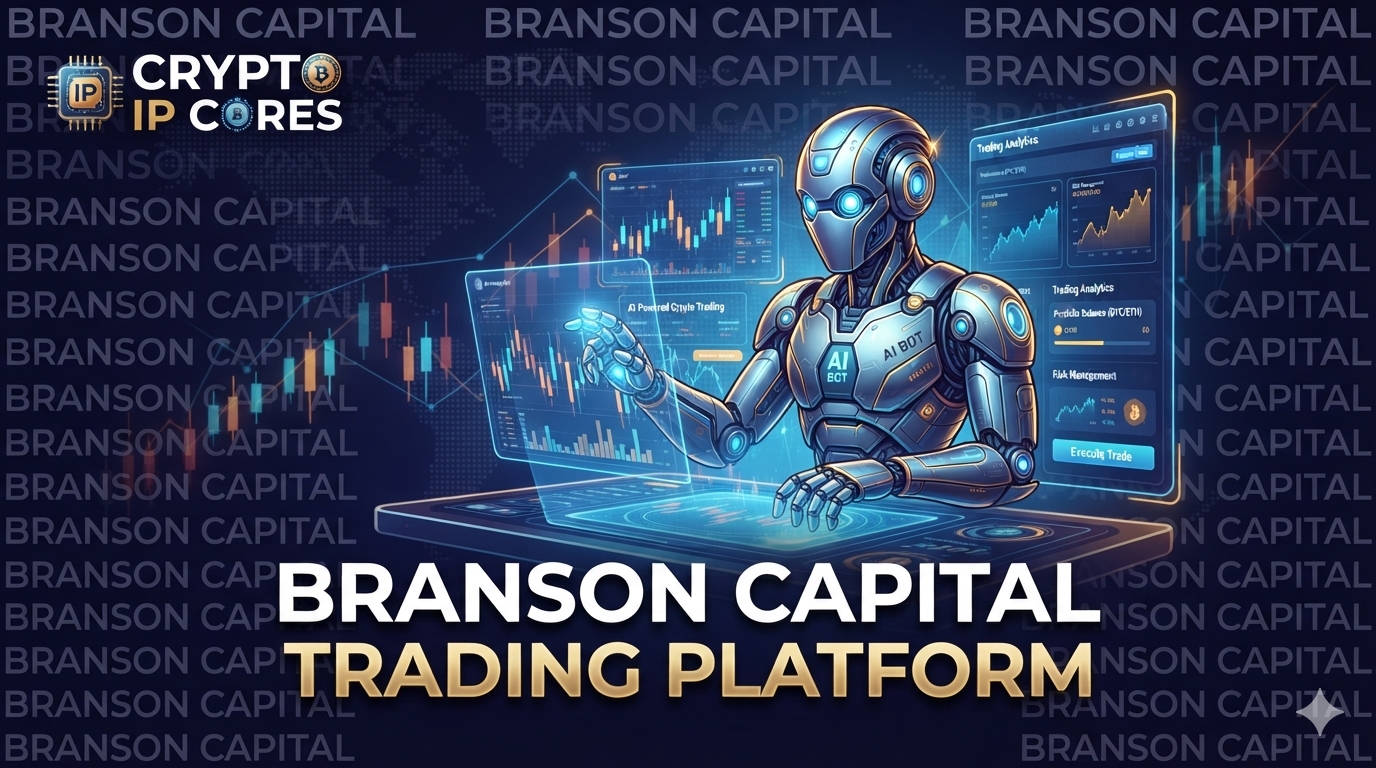
The cryptocurrency market never sleeps. For digital asset traders, the relentless 24/7 nature of decentralized finance (DeFi), Bitcoin cycles, and altcoin volatility presents both generational wealth opportunities and significant portfolio risks. Enter the era of algorithmic automated execution and artificial intelligence. In this rapidly expanding crypto tooling market, platforms promising to give retail traders an institutional edge are launching constantly. One of the most discussed systems this season is Branson Capital.
Marketed as an intuitive, AI-assisted trading system, Branson Capital claims to democratize complex market analysis. With promises of high-return opportunities, beginner-friendly onboarding, and deep algorithmic insights, it has captured the attention of both crypto novices and seasoned whales looking to optimize their daily trading volume. But in an industry plagued by fly-by-night operations and overhyped smart contracts, does this platform actually deliver?
The Evolution of Algorithmic Crypto Trading
Before diving into the specifics of Branson Capital, it is crucial to understand the landscape it occupies. Algorithmic trading—once the exclusive domain of Wall Street hedge funds with proximity servers and quantitative PhDs—has been decentralized. In the crypto space, where price action is heavily dictated by sentiment, macroeconomic news, and blockchain network activity, human reaction times are often too slow.
Retail traders face latency issues, emotional bias, and the sheer impossibility of monitoring hundreds of liquidity pools and exchange order books simultaneously. AI trading systems bridge this gap. They utilize complex mathematical models to ingest massive datasets, including historical price trends, on-chain metrics, open interest data, and global financial news.
Branson Capital positions itself as a streamlined interface for this powerful backend technology. It acts as the bridge between the complex machine-learning algorithms and the retail trader who simply wants to set their risk parameters and let the protocol execute trades based on real-time market dominance.
What is Branson Capital? An Executive Overview
At its core, Branson Capital is a web-based, AI-assisted automated crypto trading platform. It is designed to scan the cryptocurrency markets across various timeframes, identifying high-probability trade setups based on technical indicators such as the Relative Strength Index (RSI), Moving Average Convergence Divergence (MACD), Fibonacci retracements, and Bollinger Bands.
Unlike decentralized exchanges (DEXs) where you interact directly with a smart contract, or traditional centralized exchanges (CEXs) like Binance or Coinbase where you manually place market and limit orders, Branson Capital functions as a routing and analysis layer. It integrates with third-party, licensed brokerage firms to execute trades on your behalf.
The platform’s marketing heavily emphasizes its beginner-friendly nature. The graphical user interface (GUI) is intentionally stripped of the intimidating complexity found on advanced trading terminals like TradingView or Bloomberg. Instead, it offers a clean dashboard where users can adjust their risk tolerance, set their trading capital, and toggle between manual and automated modes.
How the Branson Capital Algorithm Works
The backbone of any crypto trading bot is its algorithm. The Branson Capital system relies on a multi-faceted approach to market analysis, moving beyond simple moving average crossovers.
1. Data Ingestion and Processing
The AI constantly ingests real-time and historical trading data. Crypto markets are highly cyclical. The bot looks for fractal patterns—repeating price actions that historically precede major breakouts or breakdowns. By analyzing years of Bitcoin and altcoin price history, the algorithm attempts to forecast short-term and medium-term price trajectory.
2. Sentiment Analysis and News Integration
Crypto is heavily driven by narrative. A single regulatory announcement or a high-profile corporate Bitcoin purchase can trigger massive liquidations or parabolic bull runs. The Branson Capital system reportedly integrates natural language processing (NLP) to scan recent news headlines, social media sentiment, and global economic indicators. This allows the bot to pause trading during periods of unpredictable macroeconomic volatility or capitalize on sudden sentiment shifts.
3. Signal Generation and Execution
Once the algorithm detects a potential position that meets its strict statistical requirements, it generates a signal. In manual mode, this signal is pushed to the user as an alert, allowing the human trader to validate the setup and execute the trade. In fully automated mode, the platform communicates with the partnered broker via API to execute the trade instantly, minimizing slippage.
The Registration and Onboarding Experience
One of the most significant barriers to entry in decentralized finance and crypto trading is the user experience (UX). Seed phrases, gas fees, and complex bridging protocols keep many retail investors on the sidelines. Branson Capital bypasses this by offering a highly streamlined, Web2-style onboarding process.
Step 1: Account Creation
The initial registration requires basic information: full name, email address, and a verified phone number. Because the platform routes trades through regulated brokers, strict Anti-Money Laundering (AML) and Know Your Customer (KYC) protocols must be followed later in the process. Users must secure their accounts with a robust password.
Step 2: Broker Assignment and Verification
Upon creating the account, the system algorithmically pairs the user with a licensed broker operating in their jurisdiction. This is a critical security feature; Branson Capital itself does not hold your funds. The funds are held by the brokerage, which provides the liquidity and market access. You will likely need to upload a government-issued ID and proof of residence to comply with financial regulations.
Step 3: Funding the Account
The gateway to live trading requires a minimum capital injection of $250. This base investment serves as your initial trading bankroll. Branson Capital supports a variety of fiat on-ramps, including credit/debit cards, direct bank wire transfers, and popular digital wallets like PayPal and Skrill. For a first-time trader, it is heavily recommended to stick strictly to this starting point before allocating larger portions of your portfolio.
Step 4: The Demo Trading Environment
Perhaps the most crucial feature for new users is the practice account. Before risking a single satoshi of actual capital, users are granted access to simulated funds. This sandbox environment mirrors live market conditions, allowing traders to backtest the AI’s performance, familiarize themselves with the dashboard, and tweak their risk parameters without financial exposure.
Deep Dive into Core Features
What separates Branson Capital from the hundreds of open-source grid bots available on GitHub? Let’s break down the proprietary features.
Intuitive Dashboard and UI
Crypto trading terminals can look like airplane cockpits. Branson Capital distills the noise into a manageable visual experience. The dashboard highlights active trades, daily profit and loss (P&L), win rate percentages, and overall portfolio balance. This organization noticeably reduces the barrier to entry for non-technical users.
Extensive Asset Coverage
While Bitcoin (BTC) and Ethereum (ETH) dominate the market cap, the true volatility—and potential alpha—often lies in mid-cap and low-cap altcoins. Branson Capital’s partnered brokers provide access to a vast array of digital assets, allowing the AI to scan for opportunities across DeFi tokens, Layer 1 smart contract platforms, and interoperability protocols.
Adjustable Risk Parameters
Automation does not mean a lack of control. Experienced traders understand that risk management is the only holy grail in trading. The platform allows users to customize their trading strategies by setting strict stop-loss orders, take-profit targets, and maximum daily drawdown limits. You can command the bot to only risk 1% or 2% of your total account balance per trade, safeguarding your portfolio against flash crashes.
Round-the-Clock Customer Support
Crypto markets operate on weekends and holidays. Consequently, a platform handling financial assets must offer robust support. Branson Capital features 24/7 customer service integration, allowing users to resolve technical glitches, withdrawal queries, or broker connection issues promptly.
Analyzing the Fee Structure: The Cost of Doing Business
A massive selling point in Branson Capital’s promotional material is the claim of “zero platform fees”. In the crypto industry, hidden fees can rapidly erode profit margins. Let’s examine the reality of this claim.
-
Registration Fees: Creating an account and accessing the platform software is genuinely free of charge.
-
Software Licensing: There are no monthly subscription tiers or licensing fees to use the AI algorithm.
-
Deposit and Withdrawal Fees: Branson Capital does not levy direct charges for moving your fiat currency in or out of the ecosystem.
The Catch: The Broker Spread
While the software itself is free, trading is not. Because trades are executed on partner brokerages, users are subject to the “spread”—the difference between the bid (buy) and ask (sell) price of an asset. If Bitcoin is trading at $60,000, the broker might charge $60,050 to buy and $59,950 to sell. This spread is how the brokers (and subsequently, Branson Capital through affiliate commissions) generate revenue. Furthermore, overnight funding rates or swap fees may apply if the bot holds leveraged positions open past daily rollover times.
The Truth About “98% Accuracy” Claims
In the crypto tooling market, marketers frequently utilize hyperbolic success metrics to drive user acquisition. You will often see claims floating around secondary review sites suggesting algorithms possess a “98% prediction accuracy” or similar guaranteed win rates.
As a sovereign and responsible crypto investor, you must approach these numbers with extreme skepticism. Financial markets are inherently chaotic. Black swan events—such as exchange collapses, regulatory crackdowns, or network forks—cannot be predicted by historical data sets.
The underlying reality is that no algorithm, no matter how sophisticated its machine learning architecture, can guarantee a 98% win rate over a sustained period. What a high-quality trading bot does offer is a statistical edge. By removing emotional panic selling (FUD) and greed (FOMO), executing trades at optimal speeds, and strictly adhering to risk-reward ratios, an AI can achieve a positive expected value over thousands of trades.
Treat user reviews as feedback on the platform’s functionality and user experience, not as audited performance data or guaranteed future returns. The AI carries out the heavy lifting of market analysis, but the final responsibility for investment losses continues with you.
Evaluating Safety, Security, and Regulation
The decentralized nature of cryptocurrency attracts malicious actors. Therefore, the technical foundation and security architecture of any trading tool are paramount.
Based on technical analysis and community feedback across blockchain forums, Branson Capital appears to be an authentic, functioning platform. The site uses high-level SSL encryption to protect user data from interception.
More importantly, the platform’s security relies heavily on its integration with regulated brokers. By deferring the custody of funds to entities that must comply with strict financial regulations, the risk of a platform “rug pull” (where the founders vanish with user deposits) is significantly mitigated. However, it is essential to note that regulatory landscapes vary. For example, due to local crypto regulations, the platform is not available in certain jurisdictions like Cyprus, Israel, or Iran. Always verify the regulatory status of the specific broker you are assigned to.
Beginner Mistakes to Avoid on Branson Capital
The streamlined UI of Branson Capital can create a false sense of security for novice traders. While the barrier to entry is low, the financial risks remain high. Here are the most common pitfalls newcomers must avoid:
1. Skipping the Demo Account
Impatience is the enemy of profitability. Many new traders bypass the simulated environment, eager to see their actual funds grow. This is a critical error. The demo account is essential for understanding how the bot reacts to volatility, how to set stop-loss parameters, and verifying the broker integration. Spend at least several days running test sessions.
2. Overcapitalizing the Initial Deposit
The minimum entry is set at $250 for a reason. Depositing thousands of dollars before testing the system’s live performance exposes you to unnecessary risk. Start at the baseline. If the bot proves its edge over a series of weeks and the withdrawal process is smooth, you can gradually scale your investment.
3. Treating Automation as Zero-Management
“Set it and forget it” is a dangerous mindset in cryptocurrency. The AI automates execution, not risk. If a major macroeconomic event occurs (e.g., a massive interest rate hike), even the best algorithms can get caught on the wrong side of the trend. You must regularly monitor your dashboard, adjust your maximum daily drawdowns, and pull profits off the table.
4. Leaving Default Parameters Active
The algorithm comes with default risk settings, but these are not optimized for everyone’s individual risk tolerance. A conservative trader holding a long-term spot portfolio will need different stop-loss triggers than a day trader looking for leveraged scalp trades. Customize your parameters immediately upon funding.
Advanced Strategies: Beyond the Basics
For intermediate to advanced market participants, Branson Capital can be integrated into a broader crypto wealth-generation strategy.
-
The Hybrid Approach: Do not rely entirely on the fully automated mode. Use the platform’s AI analysis to generate high-probability trade signals, but manually verify these setups against your own technical analysis (e.g., checking volume profiles or heatmaps) before executing.
-
Hedging Spot Portfolios: If you are heavily invested in holding Bitcoin or Ethereum for the long term (HODLing), you can use the trading bot to short the market during bearish downtrends. This allows you to accumulate more fiat or stablecoins while the value of your core portfolio temporarily dips.
-
Capitalizing on Weekend Inefficiencies: Traditional markets close on Friday evening, leading to lower liquidity in the crypto markets over the weekend. This often causes erratic, algorithmic-driven price spikes. Letting the bot run with tight stop-losses during these periods can capture short-term inefficiencies that human traders asleep at the wheel would miss.
Alternatives in the Crypto Tooling Market
While Branson Capital is receiving positive community feedback (with early users rating it near a strong 4.6/5), a savvy investor always maps out the competition. The crypto bot landscape is vast:
-
Grid Trading Bots (e.g., Pionex, KuCoin): These bots place a series of buy and sell orders at predefined intervals around a set price. They are excellent for sideways, ranging markets but lack the predictive AI modeling claimed by Branson Capital.
-
DCA Bots: Dollar Cost Averaging bots simply buy a set amount of cryptocurrency at regular intervals, regardless of price. This removes all emotion and analysis, focusing purely on long-term accumulation.
-
Advanced Terminals (e.g., 3Commas, Cryptohopper): These platforms offer incredibly complex conditional logic and webhook integrations for TradingView. They are highly powerful but have a massive learning curve compared to Branson Capital’s beginner-friendly onboarding.
Branson Capital positions itself right in the middle: offering more advanced AI analysis than a simple grid bot, but with a much lower barrier to entry than a professional API terminal.
Frequently Asked Questions (FAQs)
To consolidate the intricacies of the platform, here are the most commonly asked questions regarding the Branson Capital crypto trading software.
What is the minimum capital required to start?
The baseline funding requirement to activate live trading is a $250 deposit. This acts as your trading bankroll, not a fee. Our recommendation is to keep your initial investment at this minimum stage while you test the software.
Are there hidden platform fees?
No. The platform itself does not charge monthly subscription fees, registration costs, or deposit/withdrawal fees. However, you must account for the broker spread (the difference between the buy and sell price) applied by the partnered brokerage firms.
Does the AI eliminate trading risk?
Absolutely not. Automation cuts down on the time spent analyzing charts and executing trades; it does not eliminate investment risk. The final responsibility for capital preservation and loss mitigation continues with you. Always utilize strict stop-loss parameters.
Is a practice mode available?
Yes. Branson Capital provides a fully simulated demo account funded with virtual capital. It is highly advised that all users spend significant time in the demo environment before committing real funds.
How do I withdraw my crypto profits?
Withdrawals are processed through the partnered broker’s interface. You can request payouts via the same method you deposited (e.g., direct bank transfer, PayPal, Skrill, or debit card). Payouts are generally rapid, depending on the banking provider’s clearing times.
Is Branson Capital a scam or a legitimate platform?
Based on technical foundation reviews, blockchain community feedback, and the utilization of regulated broker partnerships, Branson Capital operates as an authentic, functioning trading service. However, the aggressive promotional marketing and promises of effortless high returns should be ignored. It is a tool, not a magic money printer.
Final Verdict: Is Branson Capital Worth the Hype?
The cryptocurrency market is an unforgiving arena. It demands emotional discipline, rapid execution, and deep analytical insight. Branson Capital aims to bundle these requirements into a sleek, accessible software package.
So, what is the ultimate assessment?
Branson Capital is a legitimate, working artificial intelligence-based trading service. It successfully bridges the gap between complex algorithmic trading and retail accessibility. Its standout features include an affordable $250 entry point, an invaluable demo environment, a clean interface, and diverse market access through licensed brokerages. For a risk-aware, first-time investor seeking supported entry into automated crypto trading, it represents a highly functional tool.
However, clarity is required. The marketing surrounding the platform—specifically any claims of extreme win rates or “effortless” profit—goes beyond existing, audited proof. The omission of explicit broker spread discussions in their “no fee” marketing is a standard industry tactic but requires user awareness.
If you approach Branson Capital expecting an automated ATM that requires zero oversight, you will likely be disappointed, as that is not how financial markets operate. But if you view it as a sophisticated assistant—a tool to help you scan the crypto markets faster, execute trades without emotional hesitation, and manage risk systematically—Branson Capital is an affordable, viable platform worth testing.
Start small, practice relentlessly in the demo account, and never risk capital you cannot afford to lose in the volatile world of crypto.